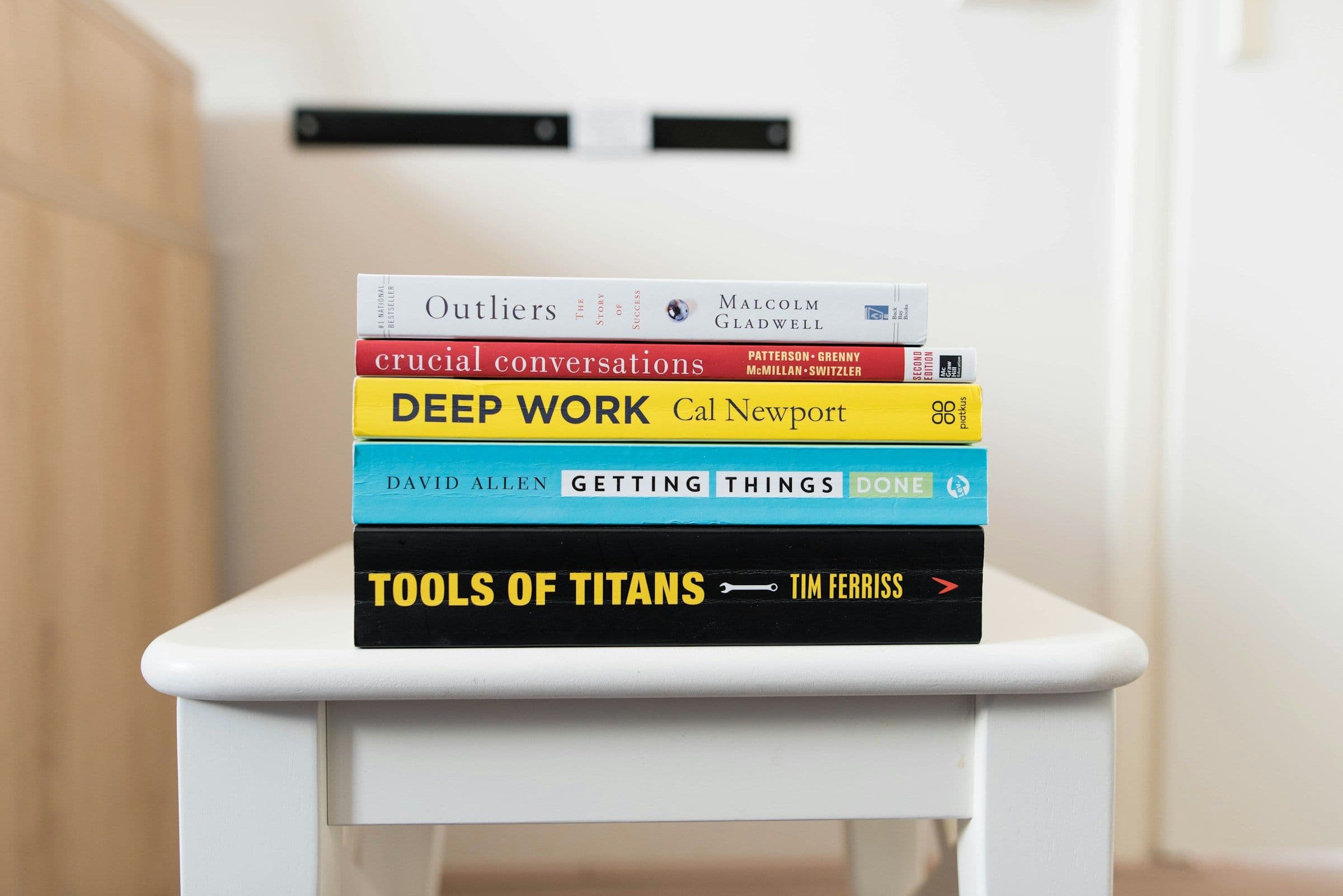
Deep work by Cal Newport
•best practices
**Shallow work:** Non-cognitively demanding, logistical-style tasks are often performed while distracted. These efforts tend not to create new value in the world and are easy to replicate.
### Chapter 1: Deep Work is valuable.
In 2012 McAfee and Erik predicted that AI will take over jobs. Only the ones who survive are the talented. celever, creative and hard & Deep workeing Fellas!
Tyler Cowen Summarize this: “Are we good at working with intelligent machines or not?”
*There are 3 groups to join in today’s world of 2023:*
1. Thos who have access to capital. → Not everyone
2. Creative with ML. → Anyone can join
3. Elite in their field. → Anyone can join.
*The 2 core ability to thrive:*
1. The ability to quickly master hard things.
2. The ability to produce at an elite level, in terms of both quality and speed.
**NOTE: if you do not produce, you wont thrive - no matter how skilled or talented you are.**
*Deep work helps you quickly learn hard things at an elite level*
“Let your mind become a lens, thanks to the converging rays of attention; let your soul be all intenton whatever it is that is established in your mind as a dominant, wholly absorbing idea” Antonion-Dalmace Sertillanges
No distraction from social media, surrounding, music, or multitasking.
To master a skill fast you must focus intensely without distraction but deep work.
by consolidating work into intense and uninterrupted pulses. follow the equation below:
$$
High QualityWorkProduced = TimeSpent * IntensityOfFocus
$$
by maximizing intensity when work, you will max the amount of time spent to produce.
*Multitasking myth*
Leroy study of switching tasks → Her study showed that people who switch tasks in a short period of time. Perform poorly
Her study show a measure called **attention residue →** People attention residue increase when switching tasks. → These people are still thinking about the first unfinished task.
$$
TheHigherTheResidue = MorePoorPerformance
$$
Grant’s show the opposite → Focusing on thing for a long period of time resulted in Peak Performance.
Therefore, to produce at your peak level you need to work fro extended periods with full concentration on a single task free from distraction.
### Chapter 2: Deep Work is rare
- Open work space can lead to many distractions. Just like Facebook and New York Times.
- Not all trends are good. The one hour to post something or search social media for journalist from New York Times.
One most work Deep to create high achievements by avoding distractions.
*Perlow test* on culture of connectivity.
She wanted to teast the question “Does it really help your work to be constantly connected?”
She gave one day off for all employees on connectivity from inside or outside work place. No emails, phone, whats so ever!
**The results:** The staff found more enjoyment, better communication, more learning, and better productive delivery to the clients.
So same job → same position → Only no distraction (Constant Connectivity)
*Why culture of connectivity persist?*
Perlow staff resisted the change.
1. Becuase it is easier to do work now and be done with it. instead of doing more planning and organizing of your work. For example, They constantly reply to emails, instead of giving their full attention to the work at hand.
2. It becomes more acceptable to run your dayh out of your inbox. Same example above!
Note: Check Daivd Allen book “Getting things Don”
Keeping yourself busy does not mean you are productive.. Answering emails all day, while ingoring the main task at hand.
> **Busyness as Proxy for Productivity: “*In the absence of clear indicators of what it means to be productive and valuable in their jobs, many knowledge workers turn back toward an industrial indicator of productivity: Doing lots of stuff in a visible manner*”**
>
> **The Principle of least resistance: “*In a business setting, without clear feedback on the impact of various behaviors to the bottom line, we will tend toward behaviors that are easiest in the moment”***
>
### Deep work is meaningful
Ric Furrer is a master craftsman → a small slip of concentration can vain more than 8 hours work. Yet he enjoy and loves his work and mastered the skills.
So, We need to find connection between deep work and a good life.
Gallagher (a person who was diagnosed with cancer, focus on how to make her life better) → “*Our brain world view is based on what we put our focus on.”*
if she focuses on cancer = She would be unhappy
if she focuses on Martini = She would be happy
<aside>
💡 Who you are, what you think, feel, and do, what you love - is the sum of what you focus on.
</aside>
Laura carstenen study:
→ discovered that young people fire the same activity in the brain when they were presented with positive and negative images.
→ Elderly on the other hand, had brain activities on the positive images, but ignored the negative images, because they master the skills over time.
**Note: this did not mean that old people are happier. But in this context, they would be happier.**
Gallagher’s and Zsikszentmihaly discovered happiness occur when we are deeply focus on ***content of challenges*** ignoring the shallow negative but experience our life’s important and positive.
**1st Key Observation:**
Master your craftsmanship → your ability to apply with respect and grace. You can generate meaning in the daily effort
**2nd Key Observation:**
To commit to deep work in your own career and to direct it toward cultivating your skills.
*Cultivating our skills is becoming extremely rare in our current economy.* Therefore, if you cultivate your skills, you will thrive professionally.